
You Understand Your Past. So Why Are You Still Struggling?
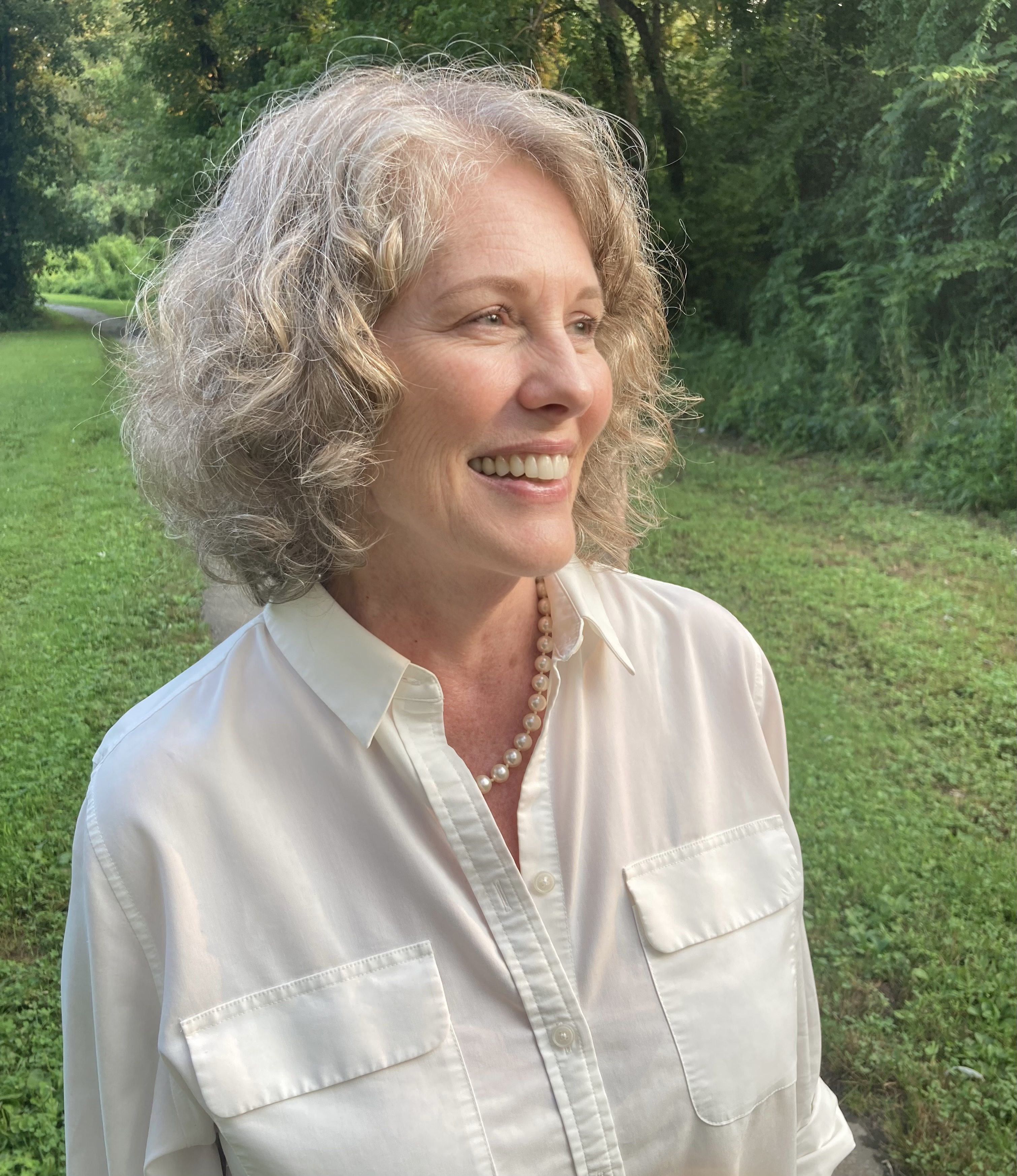
Understanding a pattern is different than healing it.
I was sixteen, standing in the second row of my High School chorus, when the sound around me became so beautiful I began to cry.
But then something unusual happened.
When the tears came and I let myself feel the beauty of our united voices, I froze. The sound was so exquisite it seemed “un-containable” and I didn't know what to do with something so out-of-control-joyous.
To enjoy that much pleasure, especially around other people, seemed dangerous and wrong. I spent the rest of rehearsal trying to hold myself together. My head went down, I shoved my pleasure down, and I did my best to compose my face. After all, no one should see that I was swept away by the splendid sound we were all making together.
I didn't know it then, but I was practicing something from my upbringing.
Four Different Men. One Common Denominator.
I've been married four times.
Having multiple divorces has confounded me for most of my life, because I had no model for divorce. My parents married once and stayed married. So did everyone else's parents in my Iowa farm town. Nobody I knew ever left anybody. Divorce simply didn't exist, or at least that's what I remember about the people in my school and community.
So where does a girl from that kind of world get a pattern of leaving or being left?
For years I looked for answers in the marriages themselves. My first husband had affairs. The second had an appetite for sex no single person could have satisfied. The third marriage lost its luster for me because my husband reminded me of my unconscious and unresolved father issues, and I didn't face them. And the fourth—this is harder to say—I diminished that relationship with my very own hands, until we worked things out about four years in. After seventeen years, he died of cancer. He bowed out. He left, too.
Four different men. Four different journeys. One basic outcome: leave or be left. One common denominator: me.
Here's what took me seventy-some years to understand: I never inherited a pattern of leaving or being left. I absorbed a climate of restraint from my family and my community, and it shaped every one of my marriages.
What Love Looked Like Where I Grew Up
The marriages in my home community were contained. They were functional. They were muted. Couples kept a straight face about each other in public, no matter what was going on. My high school debate teacher and my science teacher got married, and I thought it was the coolest thing. I was excited for them! They found each other and fell in love! But they were like, “Meh...”.
No one seemed happily nuts about their chosen person, and if they were, they certainly didn't show it. My hometown people were not in the habit of running up to their partner, throwing their arms around them, and hugging them with joyous abandon.
In fact, it seemed to me that nobody raved with appreciation about much of anything—a person, a point of view, a song, or an idea. Energy was tamped down.
My grandmother's home was quiet. There was never any music. They didn't laugh, they only chuckled a little and smiled occasionally. The Quaker meeting folks (our extended family) were conservative, too, in their expression and in their measured demonstrations of happiness.
At family dinners or Quaker gatherings, interactions were stoic and low-key. Composed and careful expression was the order of the day.
At home, we were allowed to listen to the radio and play an instrument. I enjoyed piano lessons and being in trios, musicals, and choir. My brothers and sisters played trumpets and trombones.
One day my mother and I watched a woman singing on television who was vocally expressive, and the singer moved her body as she sang. Mom shuddered a bit at the performance and said it wasn't good to bring attention to yourself like that. I remember it vividly.
In our family, holding back was the way to go. What I inherited was a template of suppressed aliveness.
Meanwhile, part of me was starving for fun, joy, and unbridled expression.

The Emotional Climate You Inherit
What you may not realize about patterns in relationships is that you don't necessarily inherit your family's outcomes — although you might. But if you can't trace your repeating pattern that way, think in terms of inheriting the emotional climate in your family: what was allowed to be felt or shown? Conversely, what was held down or concealed?
Here's the part that took me the longest to see. If part of you is starving (for attention, love, recognition, self-expression, or understanding), that part doesn't sit idly. It goes looking. In my case, without consciously knowing it, I kept marrying toward the territory my upbringing had denied: desire, passion, and visibility. Being wanted. Some hungry, hopeful part of me kept choosing men who lived close to that fire.
Unfortunately, I had no blueprint for safety around those kinds of fires.
There were no examples around me for what expressed love looks like when it's healthy. So, what came my way repeatedly was desire in distorted forms, such as desire that betrayed, desire that consumed, desire that dried up and turned cold.
And in my fourth marriage, the pattern expressed itself in the way these patterns eventually do. I stopped being the one who was suppressed, misunderstood, and denied, and became the one aiming those things at another. I'm not proud to say I held a good man's aliveness down.
One way I did that was to pass to him the criticism and judgment that was prominent in my upbringing. Nor did I see or celebrate his strengths, a habit I'd also absorbed at home. I withheld acknowledgement, affection, and approval. And I kept to myself the very things that would have helped our love thrive, such as what I felt, what I needed—honest, quality information that would have brought us closer.
Essentially, at first I gave to him what had been given to me. We turned things around, but for a time, my behavior was a perfect example of how hurt people hurt people.
In these old loops, sooner or later, we play every part. Psychologists call it transference. It's the way we hand the people we love a costume from our childhood and then respond to the costume instead of the person. Therapists have known about this for a hundred years.
Transference happens with the people closest to us, and with strangers too. It happens when our reaction is bigger than the moment deserves, such as exploding at another driver because they aren't moving fast enough, aren't paying attention, or don't know how to merge.
It's a simple example of our past announcing itself. We learned a response from our early environment (someone was impatient with us), and we just now gave it to a stranger.
Exactly On Time
I did not find my best partner until I was seventy-three years old.
You could call it bad luck, the scenic route, or a lot of frogs. But that's not really what happened.
I call it the time it took to become a woman who could let love be visible.
It took me years to become one who could be openly, embarrassingly glad about loving a man while standing in my center. It also took me years to become a person who could sing, and I mean this literally. I didn't explore my own voice until I was nearly fifty and cried through my first months of lessons while I felt all the emotions I had so carefully held down.
I found my partner Eddie exactly on time, when the true man he was and the woman who could receive him came into being.
Understanding Vs. Healing
If you've been asking yourself why your patterns don't exactly match the patterns you've witnessed in your family, may I offer a suggestion? Ask what went unexpressed in the home you grew up in. Spend some time tuning into that.
Try this:
What feelings did the adults around you refuse to show each other?
What were you praised for doing or being or containing?
In what ways do you tend to keep a straight face?
Where and how do you tamp down your emotions, dreams, or desires?
Like me, you've probably been to therapy or read books. You understand a great deal about your past.
So why do you keep ending up in the same basic place with different people, you ask?
“Understanding a pattern is not the same as healing it.”
I understood plenty by marriage number three. But I didn't really know that the negative loop doesn't end when you can explain where it came from or why it happened. Or even how to manage it. It ends when the sixteen-year-old in the choir room receives compassion and recognition for what happened that day.
To heal, my young self needed to be heard and tended to. She needed to know she wasn't wrong, or off base or weird. She needed to know that given her upbringing and the messages she received along her journey, what she did that day in choir made total sense.
Now she needed my loving presence, my arms around her, my appreciation and acknowledgement, my genuine apology, and my gratitude for bringing all of this up.
After she received that, she finally had permission to feel what she couldn't allow herself to feel back then. She allowed herself to appreciate the beauty of the sound, and the pleasure of it. She stepped into her rightful place with herself within me.
It was no surprise to me that she also had younger “sisters.” The part of me in choir that day is one I remember vividly. But surely there were other young versions that experienced something similar, even if I couldn't consciously recall the incidents. I'm thankful that healing one part of me began to heal the whole string.
One of the most beautiful aspects of all of this is that healing this timid, restrained part of me allowed her to become my partner in self-expression rather than holding me back. She never wanted to hold me back. She wanted to be all she could possibly be, but she got caught up in the limiting beliefs present at the time.
When you meet the parts of you that hold you back, you can begin to catch and recognize them. Trust me, there are layers. They can remind you what was experienced in the past and together you can heal it by recognizing it and offering compassion in real time.
You'll know there's a healing when the hesitation, fear, or concern that was once there glides away.
“Progress, it turns out, can be an absence of something.”
It's never too late to begin, and I'm proof.
If this stirred something in you about a pattern you can't shake, there's a place for that work. My six-week course, Heal Your Relationship With Yourself, is built for a group of you who are ready to meet the parts that hold you back. You can finally give them what they needed all along.
The course is in the gathering stage, and isn't open yet, but you can join the waitlist to be first in line when it is.

In Care of Relationships


Comments